
PUMA X JIL SANDER IS A PERFECTED EXERCISE IN REFINEMENT

Jil Sander and PUMA's AW26 collaboration continues an approach to refinement established by the house's founder. In 1998, Jil Sander helped establish the luxury sneaker through precise construction, softer leathers and a detailed understanding of what customers wanted to wear. Simone Bellotti applies those principles to the Speedcat, Suede and T7 tracksuit, concentrating on materials, proportions and finishing. Each retains an established sporting design, with carefully selected changes to its construction and everyday use.

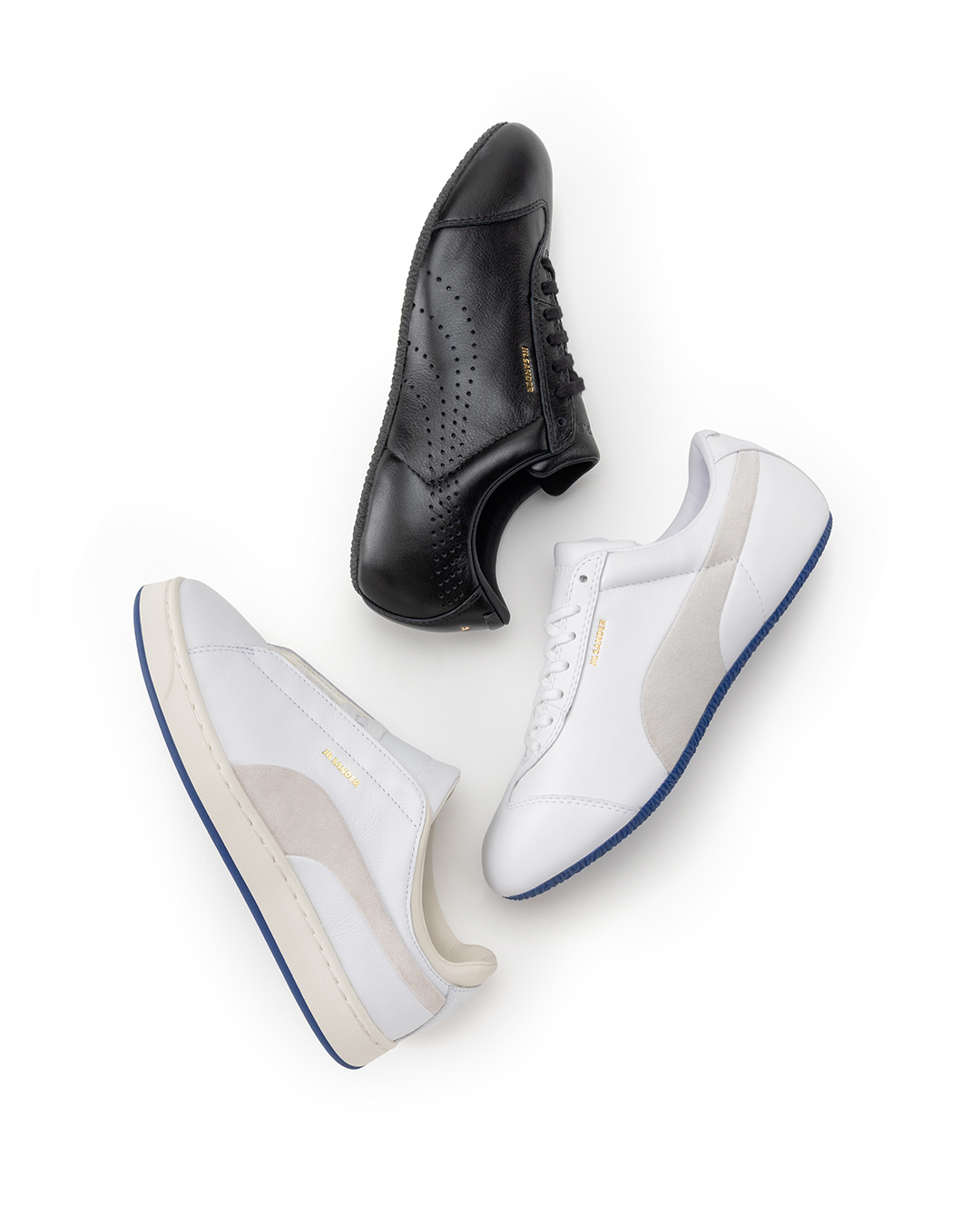
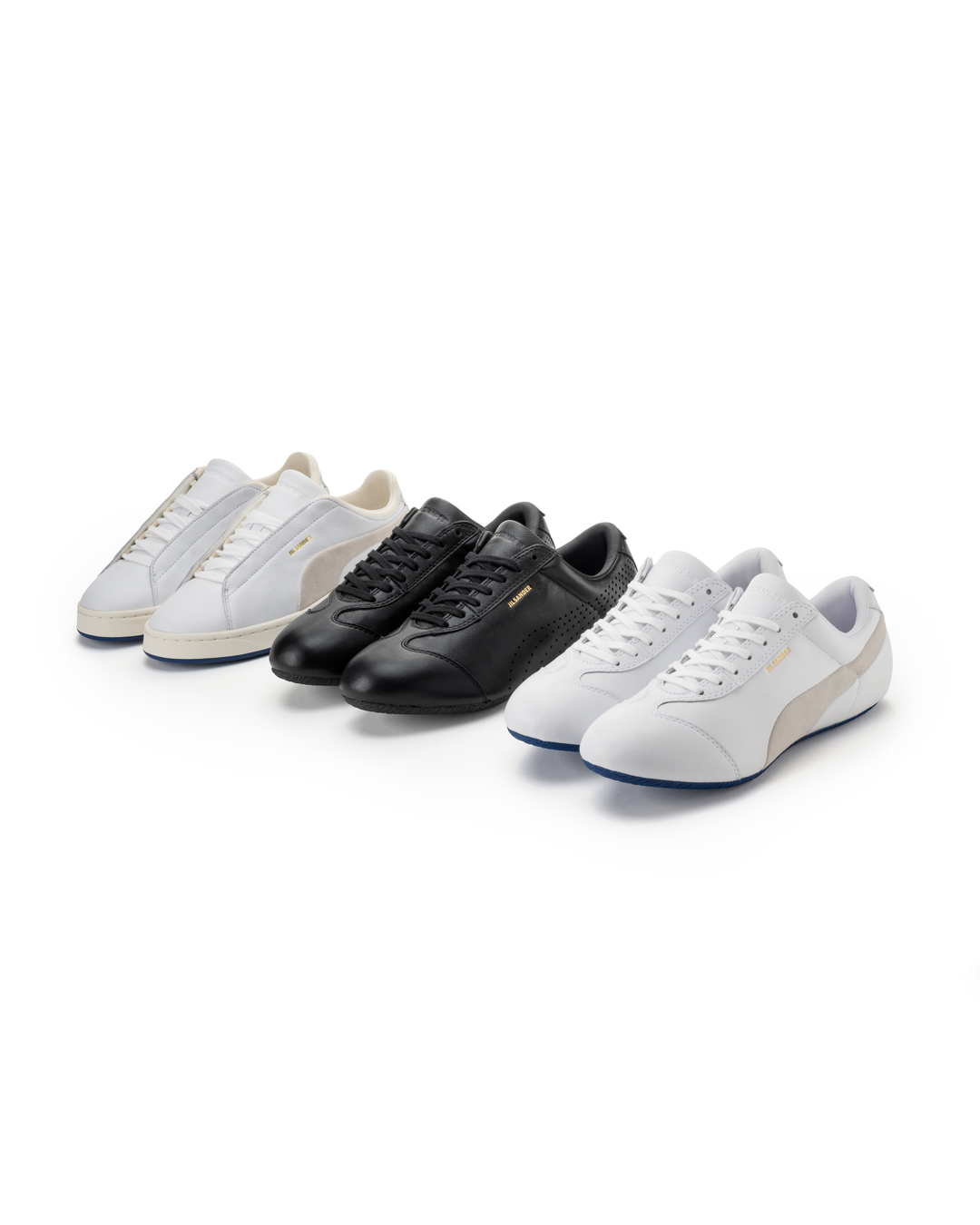
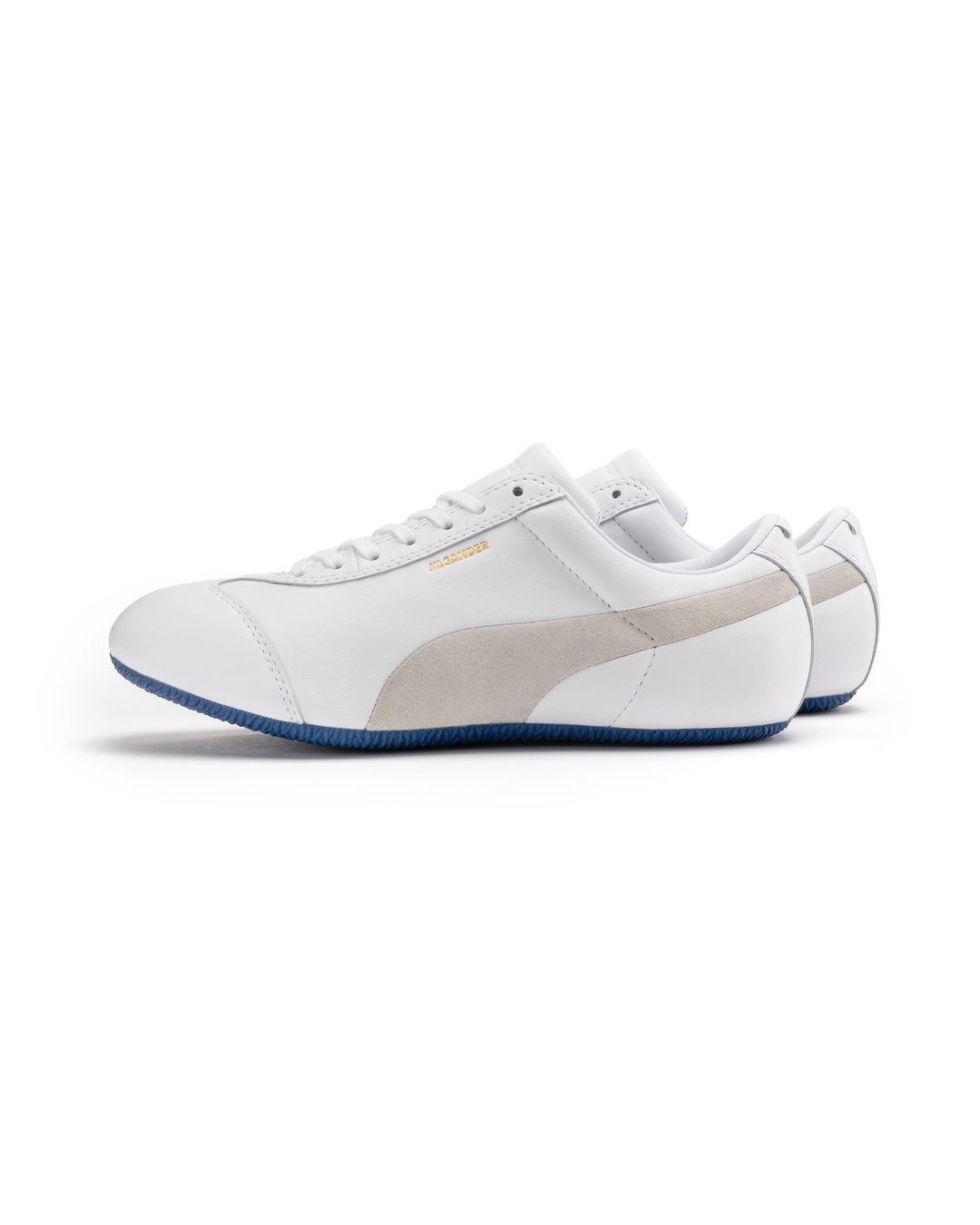
The new Speedcat revisits an earlier design from the Jil Sander and PUMA collaboration. The black Speedcat Perf replaces the applied Formstrip with a pattern of perforations, while the white Speedcat Low uses a pale suede stripe. Bellotti introduces an artisanal leather detail at the heel and a full leather lining, retaining the slender silhouette and thin rubber sole. The black and white versions use different treatments of PUMA's familiar side branding, with particular attention to the leather, stitching and finishing.
PUMA developed the Speedcat from the Race Cat, introduced in 1999 as fireproof footwear for Formula One drivers. Its close fit and thin sole allowed more precise contact with the pedals. The lifestyle Speedcat followed around the turn of the millennium, retaining those proportions for everyday wear. The design's original purpose remains apparent in its narrow profile, with a rubber sole extending around the heel and a close-fitting upper.
Jil Sander began working with PUMA in 1998, adapting established performance shoes for everyday use through finer materials and softer leather. Inspired by the supple leather of boxing boots, she wanted footwear comfortable enough for travel and long working days, with the same material quality as her clothing. The original partnership began with a reinterpretation of football footwear and continued through several collections, including the archival Speedcat design revisited in the new release. Sander's original approach established premium leather and everyday comfort as priorities within the collaboration.
Sander rejected the minimalist description, explaining that purity could accommodate opulent materials and sophisticated construction. A rubberised leather jacket from 2004 closed through its precise cut, without conventional buttons. The house's reputation rested on fabric, fit and finishing, with customers returning for particular garments. The new PUMA collection continues that emphasis on material quality, with leather linings, adjusted proportions and specially developed textiles.
The house's showrooms also respected existing design. In 1994, Sander commissioned Michael Gabellini to transform a historic Milan palazzo and former cinema into the house's headquarters. The interiors incorporated limestone, nickel silver, white glass and concealed lighting. Her Hamburg showroom, opened in 1996, preserved historic plasterwork and woodwork while extensively restructuring its interior. Bellotti returned Jil Sander's runway presentations to the Milan headquarters for his SS26 debut in September 2025.
Bellotti's background combines sportswear and archival design. Bellotti spent sixteen years at Gucci, working across menswear and sportswear, before leading design at Bally, where he studied archival footwear and revised established silhouettes through proportion, hardware and finishing. His experience spans the technical requirements of sportswear and the careful adjustment of familiar designs. The PUMA collaboration brings those considerations together through its racing footwear, leather trainers and tailored interpretation of a tracksuit.
Bellotti has described spending weeks researching fabrics and adjusting the cut of individual garments. His SS26 debut concentrated on removing material to establish precise silhouettes. AW26 explored where additional fabric could improve a garment, including changes to volume and construction. For the PUMA collaboration, his interventions range from the Speedcat's leather heel to the development of an entirely new wool fabric for the T7.


Meadow Walker appears alongside Barry Lawson in the AW26 campaign. Her father, Paul Walker, became famous playing Brian O’Conner in the Fast & Furious films, while his enthusiasm for performance cars extended beyond the screen. He collected and raced cars and helped establish the Always Evolving motorsport organisation. Meadow was selected for the campaign partly because of that family connection to racing.
Photographed by Guen Fiore and filmed by Lisa Rovner, the campaign places Meadow and Barry among tall grass and wildflowers. Bellotti imagined them arriving from a city street, wearing the collection for leisure and time outdoors. Charlotte Collet styled the looks.
The collaboration introduces apparel for the first time, revisiting PUMA's T7 tracksuit, originally introduced in 1968 and named after its seven-centimetre Formstrip. Bellotti adjusts the proportions with a boxy jacket and tapered trousers, using bi-stretch wool developed exclusively for Jil Sander. The material combines fluidity, structure, breathability and natural temperature regulation. A specially developed club navy colour, brushed silver zip puller and woven label complete the design.
PUMA’s Suede developed through decades of use, from basketball and the Clyde of 1973 to adoption by breakdancers and skateboarders. Bellotti retains its familiar shape while introducing premium leather, a refined outsole, concealed lace construction and a full leather lining. Available exclusively in white, the new version changes the treatment of the upper while preserving the established sole profile. The concealed fastening removes the usual visible arrangement of laces, leaving the leather surface, stitching and contours of the shoe more exposed.
